

 Home
 Lottery
 SportsBook
 Live Casino
 Promotion
 PH365 App
Bull Bull is not a game where you just deal the cards and win. It is fast and involves calculation. You hold 5 cards, figuring out how to arrange them into a group of 3 cards that adds up to a round ten, then compare points with your opponent. It sounds simple, but once you sit at the table you realize there is more to think about than you imagined.
This article goes straight into how to play Bull Bull at Ph365, the variants currently available, and a few practical tips to help you avoid losing money to very basic mistakes.

What Is Bull Bull?
Bull Bull is also known as Niu Niu or Bullfight, and originated in China. The game uses a standard 52-card deck, and each player is dealt 5 cards. Your task is to pick out 3 cards whose total point value is divisible by 10. If you can, you have a “Bull”. The remaining two cards determine how strong or weak your hand is.
Here is an easy example to picture:
- You have 3 cards: 2, 8, 10, so the total is 20, which means you have a Bull.
- The two remaining cards are 7 and 9, so the total is 16, and you take the last digit, which is 6 points.
- Your hand is Bull 6.
If no group of 3 cards adds up to a round ten, you have no Bull. This case is quite weak, and usually you can only hope to win by waiting for your opponent to be even weaker.
Bull points are ranked from low to high. Bull 1 is low, Bull 9 is high. Stronger than Bull 9 are special hands such as Bull Bull, four face cards, or five face cards, depending on the rules of each table. The interesting part of this game is that you do not just look at your own cards, you also have to guess your opponent’s hand and decide on a reasonable bet level.
How to Play Bull Bull at Ph365
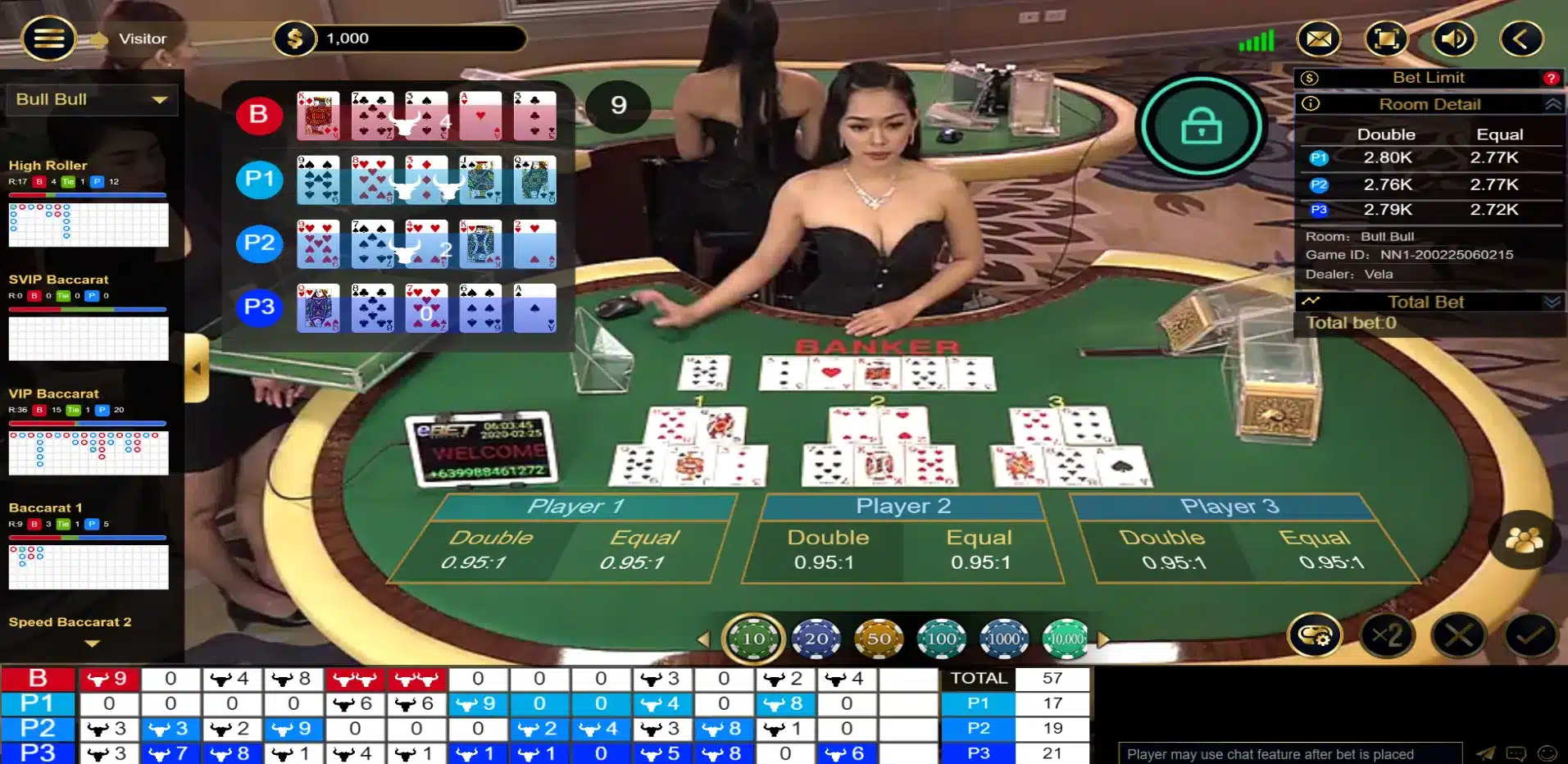
Bull Bull has a few different versions. At its core it is still about arranging cards and comparing points, but each version adds a little extra flavor.
Classic Bull Bull
This is the most standard version. Each player receives 5 cards, arranges a group of 3 cards to make a Bull, then compares against the dealer or other players. This version suits beginners because the rules are compact, the pace is fast, and there are not too many layers to remember.
Bull Bull 6 Sets
This version is harder because there are more card groups to handle. You do not just arrange one 5-card hand and be done, you have to calculate more combinations and weigh more options. Anyone who likes the feeling of really using their brain will find this version a good fit. But if you are new, do not jump straight in here. It is easy to get confused.
Bull Bull Four Sets
In the Four Faces version, the cards are dealt into four sets instead of the familiar dealing style. This changes the rhythm of arranging cards, forcing you to rethink how you look at your hand. It is not too hard, but different enough that you cannot play on autopilot.
Bull Bull Ranked
If you like the feeling of competition, the ranked version is the place to test yourself. Play against other people, climb the ranks, compete for rewards. This version is more pressure than normal play, because your opponents are real people, not just a dealer. The mental burden is therefore heavier too. Anyone who is not yet solid with their bankroll and not yet used to the pace of the game should hold off on entering here.
Bull Bull Tips to Avoid Rushing
Let me say this clearly first: no tip guarantees an absolute win. Bull Bull still involves luck. But playing with a method at least means you do not make things hard on yourself.

Manage Your Money First, Count Cards Later
The most common mistake is not arranging cards poorly, but throwing money in carelessly. When you are losing and want to recover quickly, it is easy to bet big. Bet big, then lose again, and you start to lose your composure.
Before you play, set yourself a few numbers:
- How much you will play with at most today.
- How much to put in per round.
- At what loss point you stop.
- At what win amount you lock in.
It sounds funny, but every long-time player has these numbers. Without them, it is very easy to overplay.
Only Looking at Your Own Cards Is a Mistake
Bull Bull is not a solo game against the cards. You also have to watch your opponents. Whether they bet heavy or light, whether their betting rhythm changes, whether they tend to bluff or play safe. These things are not always right, but the more you observe, the more basis you have for decisions.
If an opponent suddenly bets big, they may have a strong hand. They could also be bluffing. But if you have nothing in your hand and still chase in, that is your mistake, not bad luck.
Understand Probability, Do Not Play on Feeling
Not every hand is worth chasing. Some hands look nice, but the probability of getting a Bull is very low. Some hands look ordinary, but the chance of making a high score is actually better.
You do not need to calculate like a mathematician. Just play enough to recognize which hands to keep and which to let go. Playing the free version first is a good way to practice this without losing money.
Try the Demo Before Playing Real Money
We have a demo version. This is well worth using. You can practice arranging cards, get used to the speed, understand the scoring, and try a few betting styles without worrying about losing money. When your hands feel steady and your head feels clear, that is when you move to real money.
Many people skip this step. They jump straight into real money, lose a few rounds, and only then realize they still do not understand the rules. By then the wallet is already thin.
Play Bull Bull the Right Way
Bull Bull is a fast, fun game with a competitive element. But the faster it is, the easier it is to get swept up. When you win you want more, when you lose you want to recover. That cycle is very familiar, and also very costly.
To play long term, you need three things: understand the rules, protect your bankroll, and know when to stop. No strategy can replace you controlling yourself. The game should be a place for entertainment, not a place to carry your financial burden.
If one day you find yourself getting bitter, trying to chase losses, placing bets without thinking about the cards anymore, it is best to stop. Take a break, or stop for the day entirely and play again later.
